
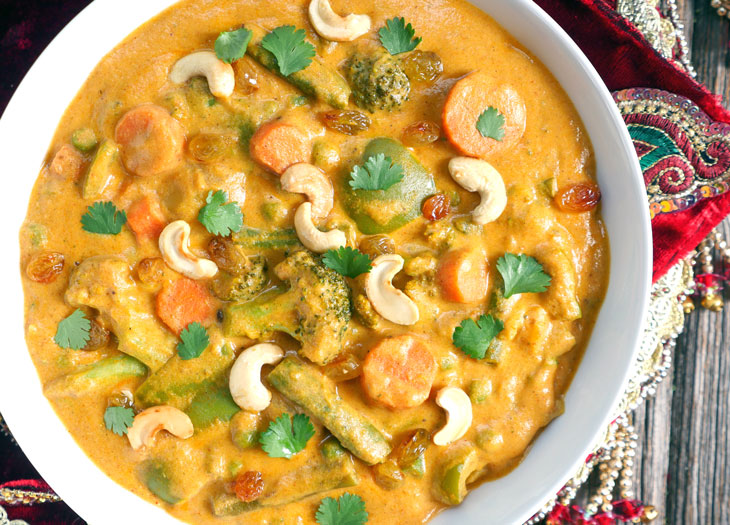
Hello readers,
Today I'm going to share with you a famous Mughlai cuisine "Navratan Korma" which means "Nine Gems". Korma has its roots in the Mughal cuisine of the Indian subcontinent, kormas were often prepared in Mughal court kitchen. The famous white korma garnished with Vark, this dish have been served to "Shah Jahan" and his guests at the inauguration of the "Taj Mahal". So let's start to make "White Navratan Korma".
Ingredients:-
1. Paneer (cottage cheese)- 7-8 pieces (cut into 1 cm cubes).
2. Heavy cream- 5 tbsp.
3. Pineapple-3-4 pieces (bite sized).
Vegetables:-
1. Carrots-4 medium (chopped).
2. Peas-1-1/2 cup.
3. Potatoes-3 medium (chopped).
4. Green beans- 1/2 cup.
5. Cauliflower florets- 1/2 cup(chopped).
6. White button mushrooms- 8( halved).
7. Baby Corn- 5( chopped).
Spices:-
1. White Onion - 3 medium ( boil & paste).
2. Garlic paste- 1 tsp.
3. Ginger paste- 1 tsp.
4. Fresh yogurt-150g.
5. Red chili powder- 1-1/2 tsp.
6. Kashmiri red chili powder-1 tsp.
7. Garam masala powder- 1 tsp.
8. Salt- To taste.
9. Bay leaves- 2 whole.
10. Cinnamon -2 inch stick.
11. Green Cardamom-3-4 whole.
12. Black Cardamom- 2 whole.
13. Cloves-4 whole.
14. Mace- 3 single strands.
15. Ghee(clarified butter)- 3 tbsp.
16. Coconut milk-2 cups.
17. Boil green chili paste-1 tsp.
For Royal paste:-
1. Almonds- 15( blanched & peeled).
2. Cashew nuts-15( soaked).
3. Melon seeds-1-1/2 tbsp(soaked).
4. Poppy seeds-1-1/2 tbsp (soaked).
For Garnishing:-
1. Ghee (clarified butter)- 1-1/2 tbsp.
2. Almonds- 8-9( blanched & peeled)
3. Cashew nuts- 15 numbers.
4. Walnuts- 10( halves).
5. Melon seeds- 1/2 tbsp.
6. Raisins- 1-1/2 tbsp.
7. Pistachios- 15 whole.
8. Saffron- 8-10 strings.
9. Ginger- 2-1/2 tsp ( julienned).
10. Fox Nut- 20g.(optional).
11. Silver vark.
Preparation Method:-
Step 1- In a grinder add all Royal paste ingredients (soaked almonds, melon seeds, cashew nuts, poppy seeds)with little water and make a smooth paste , transfer into a bowl set aside.
Step 2- place a wok over medium flame, add ghee once ghee will start melting , put whole garam marsala (bay leaves, cinnemon sticks,green&black cardamom,clove, mace)and fry till become arometic.
Step 3- Now add boiled onion paste, garlic paste, ginger paste and green chili paste saute until raw aroma goes away.
Step 4- Once spice Paste will turn golden add nut-paste(step-1) and yogurt mix well.
Step 5- Now add kashmiri red chili powder, red chili powder,and cook for 3-4 minutes in low flame, stir often so that the mixture doesn't get stuck to the bottom of the pan.
Step 6- After 3-4 minutes add all vegetables and combine well with spices. Once all vegetables coated well with spices add 2 cups of coconut milk and season with salt.
Step 7- Cover the wok and let veggies cook in simmer, once veggies will became tender add heavy cream and stir , cook for another 2 minutes in simmer, sprinkle garam masala Powder and cover the wok, turn off flame.
For Garnishing Korma:-
Step 1- Take a fry pan add ghee (1-1/2 tbsp).
Step 2- Add cashew nuts, almonds(blanched & peeled), walnut, Pistachios and fox nuts fry till pale golden, take out and keep in a bowl.
Step 3- Same ghee add melon seeds, raisins and saute for few seconds, take out and keep in the same fried nuts bowl.
Step 4- Now in the same pan add paneer (cottage cheese) pieces fry them for 1 minute, add pineapple pieces and return all fried nuts back to the pan, mixed all ingredients well, add julienned ginger and saffron strings with it. Saute for 30 seconds.turn off flame.
Step 5- Transfer this fried paneer and nut mixture into the Korma gravy stir to combine all ingredients well.
Step 6- Now take out "white Navratan Korma" into a serving bowl and garnish with silver vark, serve hot with "naan" or "cumin rice".
Comments
Post a Comment