
Dear Friends,
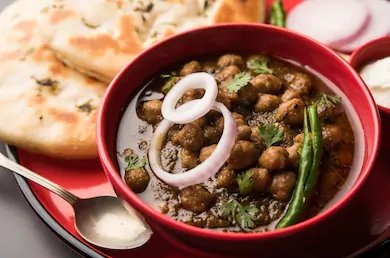
Today, I am here to share with you a famous Punjabi delicacy Pindi Chana. It is believed that this dish was originated from Rawalpindi. The present-day this place is in Pakistan. One unconfirmed story related to his dish is said, Anuj Wadhwa, the grandson of 'Kasturi Lal Wadhwa'; says that his grandfather was about 20yrs old when he ran away from Pakistan during partition. The young man (Kasturi Lal Wadhwa)who had in Rawalpindi tried his hand at routine jobs. He decided to turn to his interest in food for sustenance and income. Kasturi Lal started sitting up a cart on the India Gate lawns and had starting sold 'Pindi Chana' with 'kulcha'. Now, this delicacy became famous in India and still a Wadhwa generation running Pindi restaurant.
Ingredients:-
- White chickpeas- 550g.
- Tea bag-1(Taj tea-bag).
- Bay leaves-2nos.
- Onion- 2(finely chopped).
- Ginger-2inch(finely chopped).
- Green chilis- 3-4(slit).
- Tomato-2chopped.
- Turmeric powder-1tsp.
- Dry mango powder-1tsp.
- Black salt- 2tsp.
- Salt-To taste.
- Chole masala- 2tbsp.
- Sunflower oil- 2tbsp.
- Ghee(clarified butter)-1tbsp.
For chole masala:-
- Cinnamon stick-1-1/2inch.
- Cloves-4-5nos.
- Green cardamom-4pods.
- Brown cardamom-2pods.
- Fenugreek seeds- 1/2tsp.
- Cumin seeds- 1tbsp.
- Coriander seeds-1tbsp.
- Dried pomegranate seeds-1tbsp.
- Dry red chilis-5-6nos.
- Whole black peppercorns- 1-1/2tsp.
For garnishing:-
- Ginger- 1inch(thinly sliced).
- Lemon- 1(wedges).
- Cilantro leaves- 2tbsp(finely chopped).
Preparation Method:-
Step 1- Before one day, rinse and soak chickpeas overnight in a bowl with sufficient water.
Step 2- Next day, Place a frying pan on medium flame. Dry roast all spices mentioned in chole masala until aromatic. Let them cool.
Step 3- In a grinder jar, add all dry roasted spices and make a smooth powder with them. Take out 2tbsp powder for chole and keep the remaining spice in an airtight container for further use.
Step 4- Now, in a pressure- cooker, add soaked chickpeas along with tea bag, salt. Cook for 4-5 whistles then, lower the flame and cook for another 5-6 minutes. Turn off the flame and let the pressure release automatically.
Step 5- Once pressure is released completely, discard the teabag. Take out the boiled chickpeas in a bowl and reserve the stock in another bowl.
Step 6- Place a wok in a medium flame. Add sunflower oil and ghee. Once heated well, add bay leaves, onion. Saute for few minutes then, add tomatoes. Cook until onions and tomatoes become mushy.
Step 7- Now, add ginger, green chilies, turmeric powder, black salt, dry mango powder, chole masala, salt. Stir and combine all spices well.
Step 8- Add boiled chickpeas and combined well with all spices. Lower the flame add 1/2 cup of chickpeas stock. Check the salt and spice at this stage and adjust according to your taste. Cover the pan and cook the chickpeas for 5-6 minutes.
Step 9- after 5-6 minutes, open the lid. Add grated ginger, chopped coriander leaves, and lemon wedges.
Step 10- Transfer in a serving bowl. Now it's ready to serve with kulcha.
Comments
Post a Comment